
White uPVC frames suit Bengaluru’s bright sun, monsoon moisture and busy urban dust, but their clean appearance depends on the right specification and routine care. By the end, you will know how to clean the profiles, identify damage, compare finish options and request evidence that supports long-term colour stability.
Key takeaways
- Clean white frames with mild detergent, water and a soft cloth.
- Check whether marks are removable dirt before treating staining or damage.
- Ask for weathering and colour-retention evidence before choosing white profiles.
- Inspect seals, drainage paths and installation finish to preserve appearance.
Why white uPVC works well in Bengaluru conditions
White uPVC suits Bengaluru because its light surface absorbs less solar radiation than dark foiled finishes, reducing peak profile temperature and thermal movement. The size of that benefit still depends on glass area, elevation, orientation, ventilation and formulation. The benefits of Lumia white profiles in Bengaluru are practical, not merely decorative.
Monsoon humidity does not create the repainting cycle associated with painted timber. The trade-off is visibility: road soot, construction dust, mud splash, insect marks, algae and hard-water spots appear sooner on white than on grey, brown or black frames.
| Material | Practical advantage | Main drawback |
|---|---|---|
| White uPVC | Lower solar absorption; small marks are less conspicuous than on contrasting woodgrain foil | Dirt and mineral spots show quickly |
| Painted or powder-coated aluminium | Rigid frames and broad colour choice | Coating damage can expose the substrate; repainting or recoating is disruptive |
| Wood | Natural appearance and repairable surface | Needs sealing or repainting against Bengaluru’s humid monsoon conditions |
| Laminate-coated uPVC | Woodgrain appearance with less routine painting | Foil scratches and edge damage can be conspicuous |
| Darker uPVC | Hides road dust and some stains longer | Absorbs more solar heat, increasing temperature and movement |
Choose white when you control regular cleaning, the elevation is not constantly exposed to traffic or construction dust, and repainting is unacceptable. White does not prevent scratches or chemical damage. Specify installation gaps because uPVC expands about 0.07 mm per metre per °C; reduced solar heating does not eliminate movement.
The cleaning routine that keeps white frames bright
Wash exposed white window profiles in Bengaluru monthly if they face dusty roads or construction work. In cleaner locations, wash them at least every three months, and rinse sooner after heavy mud splash or nearby civil work.
1. Rinse the frame with clean water to remove loose grit. Skipping this step lets dust scratch the surface during wiping.
2. Mix a small amount of pH-neutral liquid detergent into lukewarm water. Use a clean microfiber cloth or soft sponge, starting at the top and working downward.
3. Give extra attention to drainage channels, corner joints and the lower frame, where soot and mud collect. Rinse thoroughly so loosened dirt and detergent do not dry into a film, then wipe with a separate soft cloth to reduce water spots.
4. For hard-water deposits, repeat the rinse-and-wipe process before trying a product approved in the profile supplier’s maintenance instructions. Clean gaskets and hardware separately according to their instructions, and keep every weep hole open.
5. Keep abrasive powder, steel wool, wire brushes, solvent cleaners, paint thinner, acetone, strongly alkaline chemicals, blades and metal scrapers away from the surface. Aggressive cleaning can dull PVC, scratch the finish or damage gaskets and sealants.
Regular gentle washing is safer than infrequent forceful cleaning. Remove deposits early; baked-on soot and cement residue demand more effort and increase the risk of surface damage.
How to tell dirt from staining or permanent damage
Start with a damp white cloth: if the mark transfers and disappears after water and mild detergent, it is surface dirt rather than damage.
| Mark | What the test shows | Treatment |
|---|---|---|
| Surface dust or soot | Transfers to a damp cloth | Wash with lukewarm water and pH-neutral detergent |
| Mud or insect residue | Softens after soaking | Soak, then lift with a microfiber cloth; do not scrape |
| Cement splash | Remains raised after ordinary washing | Soften with water and follow the supplier’s removal instructions |
| Adhesive residue | Feels tacky or leaves a film | Ask the installer which adhesive was used; apply only a PVC-compatible approved remover |
| White chalky deposits | Clusters near taps or sprinklers | Rinse repeatedly; treat as hard-water minerals |
| Green or black growth | Returns in damp areas | Check drainage and ventilation before cleaning again |
Cement needs prompt attention. Hardened cement and abrasive tools can scratch the profile, so test the approved method on an inconspicuous area first. Do not reach for acetone, paint thinner or an unknown solvent to remove adhesive; these products can dull PVC and damage gaskets or sealants.
A mark that remains after gentle cleaning points to weathering, heat or chemical attack. Yellowing, uneven gloss, a brown heat mark or lasting colour change is not ordinary dirt. For lumia white upvc windows, a scratch that catches your fingernail is a repair issue, not a cleaning issue.
Deep scratches, melted sections and severe discolouration usually need replacement of the affected sash or profile component. That produces a more uniform finish than paint or aggressive polishing.
What evidence supports resistance to yellowing
Before approving a white profile for an exposed Bengaluru elevation, request evidence for the actual external formulation, not a colour name. A white surface can still yellow, chalk or lose gloss under prolonged ultraviolet exposure.
1. Ask for the colour-retention or weathering test report for the external profile compound. It must state the exposure method, duration, ultraviolet or radiation conditions, temperature and humidity, specimen details, measured colour change, chalking or gloss-loss limits, and pass criteria.
2. Request the profile’s EN 12608-1 classification, including climatic classification, impact class and wall-thickness class. Do not accept “German-engineered” or “white” as substitutes for these details; the standard addresses characteristics such as impact resistance, heat reversion and weathering.
3. Obtain warranty wording that defines acceptable colour change, chalking and gloss loss, coverage period, inspection method and exclusions. Check whether maintenance neglect, chemical cleaners, coastal exposure, installation defects or blocked drainage void the warranty.
4. Ask for the stabiliser-system declaration and a current lead-free or restricted-substance compliance statement for the specific extrusion compound. LUMIA UPVC PROFILE can make this decision more useful by tying those documents and test results to the supplied batch.
5. Record the extrusion batch number and retain a physical control sample. Screen images cannot distinguish blue-white, grey-white, cream or warm white reliably, and adjacent batches can vary; specify a measurable colour reference where possible.
Related product
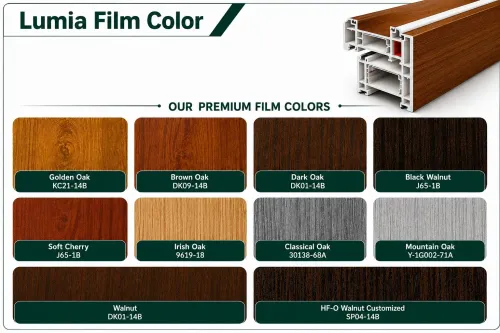
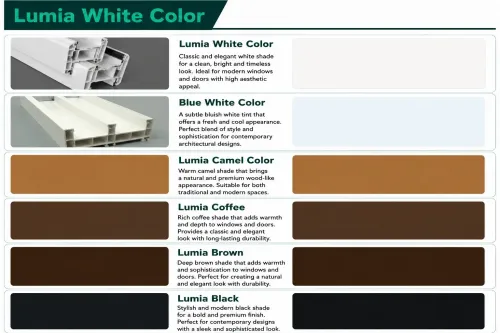
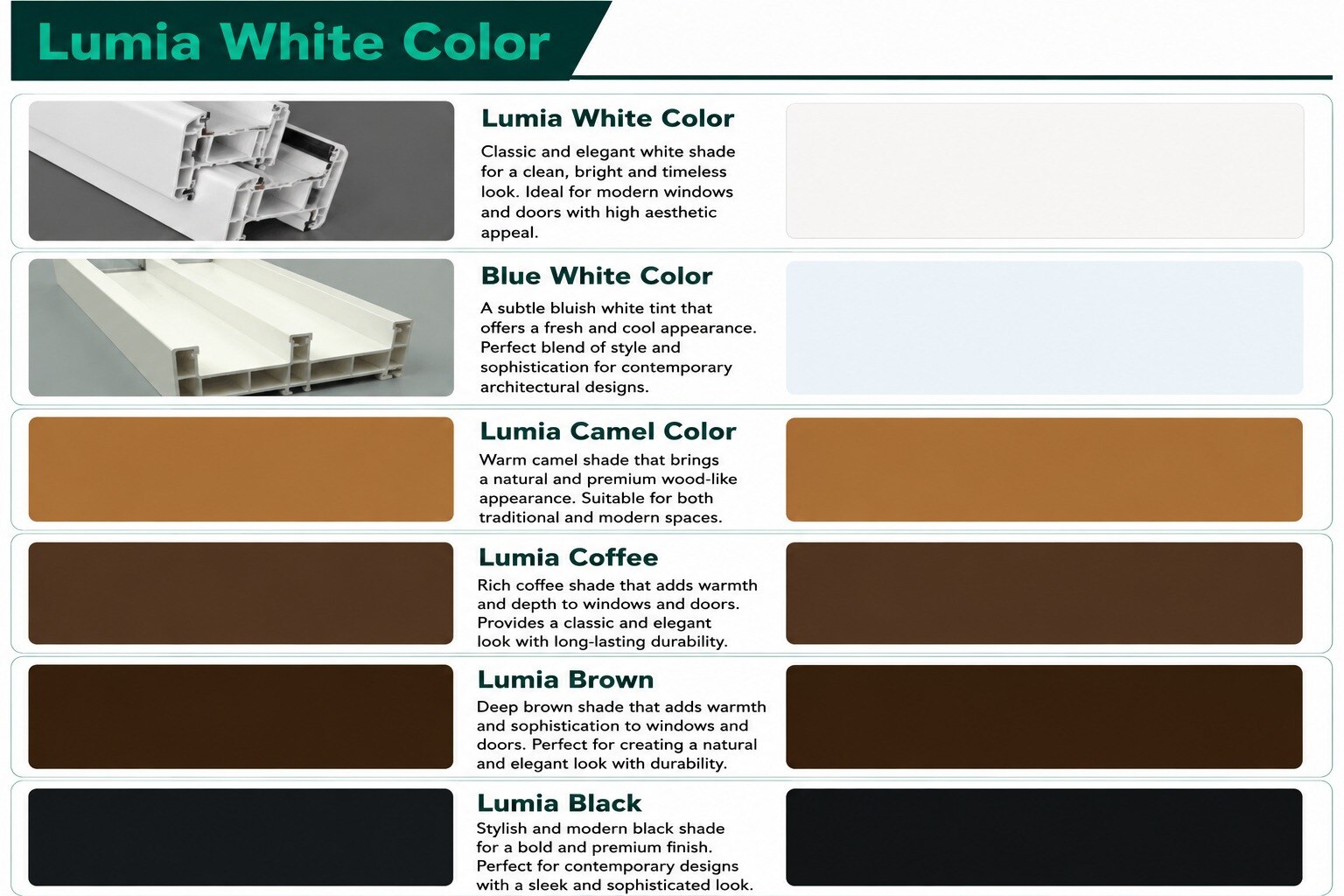
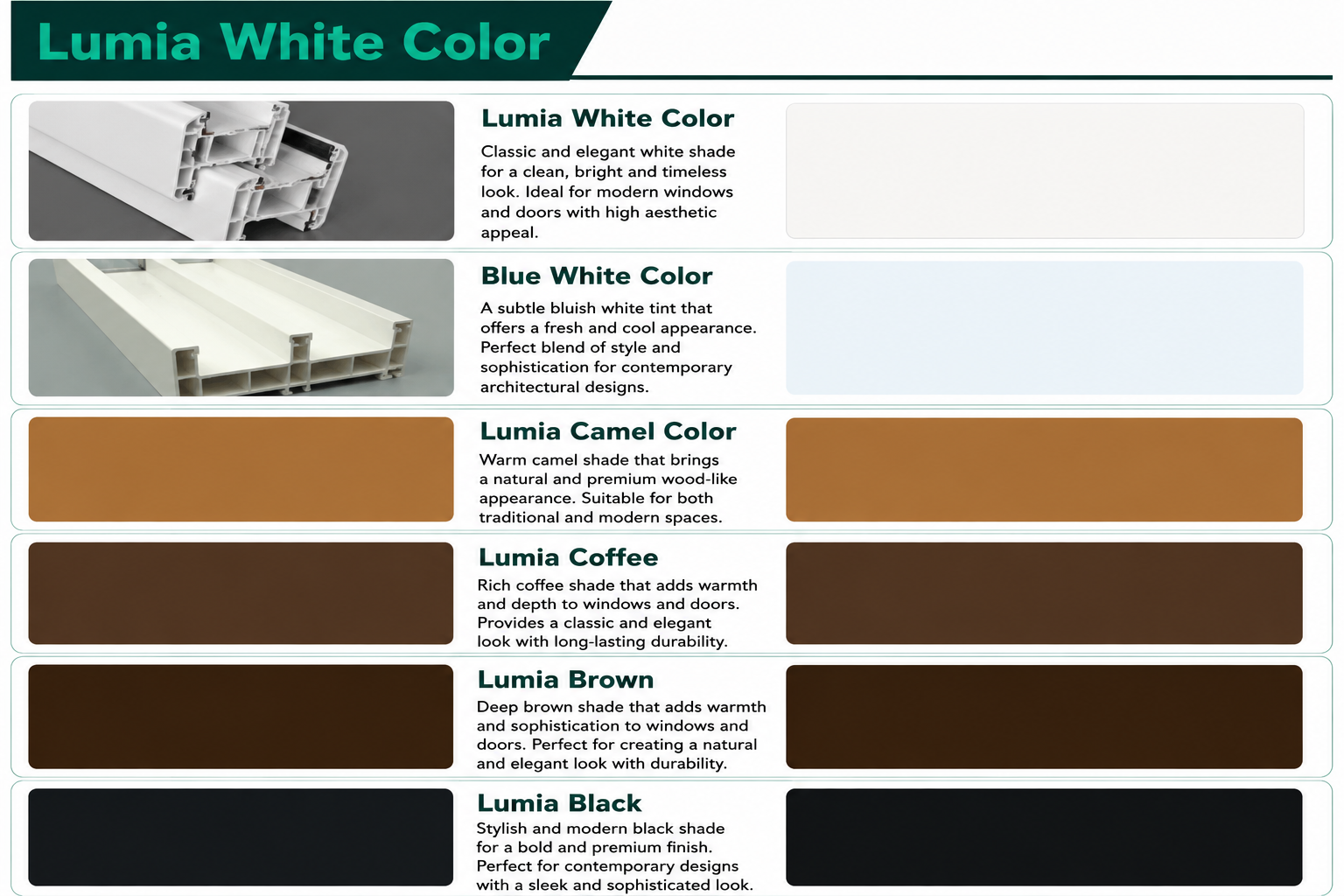 | Lumia Colors The Lumia Color Collection is specially developed to enhance the beauty and elegance of modern uPVC window and door systems. View product → |
The checks that preserve a fresh appearance after installation
1. Inspect every Lumia white uPVC windows installation in daylight before handover. Check shade uniformity across sashes, welded corners, corner flash, mitre alignment, scratches, gloss differences, gasket seating, and plaster or silicone contamination. White can hide some weld variation, but it cannot hide poor finishing.
2. Assess the complete assembly, not the profile alone. Confirm frame geometry, glazing, spacer, reinforcement, drainage, hardware, gaskets and installation seals, then request Uw, acoustic, air-permeability and watertightness data where specified. A clean frame cannot correct a badly sealed or poorly reinforced window.
3. Keep weep holes and drainage paths open during every cleaning cycle. Inspect hinges, rollers, locks and seals periodically; blocked drainage creates moisture marks, while degraded gaskets allow water and air leakage that washing cannot cure.
4. Check long frames for correctly sized perimeter gaps, secure fixings and movement allowance. uPVC expands by about 0.07 mm per metre per °C, so white reduces solar heating but does not remove thermal movement.
Nearby construction can redeposit dust, and Bengaluru’s hard water can leave mineral rings; remove the source instead of increasing detergent strength.
5. If approved cleaning does not remove colour change, heat distortion, chemical attack or a deep scratch, replace the affected sash or profile section. Do not paint it: paint changes gloss and maintenance requirements. These checks deliver the white upvc profile benefits you are actually paying for.
Frequently asked questions
Why does white uPVC work well in Bengaluru conditions?
White surfaces absorb less solar radiation than dark foiled finishes, which can reduce peak profile temperature and thermal movement. Results also depend on glass area, orientation, elevation, ventilation and profile formulation.
How do you clean white uPVC window frames without damaging them?
Remove loose dust, wash with clean water and a mild detergent, then wipe with a soft cloth and rinse. Avoid abrasive pads, solvent cleaners, bleach and harsh chemicals.
How can you tell dirt from permanent staining or damage?
Test a small hidden area with mild detergent and water. If the mark remains after rinsing and drying, inspect for embedded staining, surface abrasion, chemical damage or colour change rather than scrubbing harder.
What evidence supports resistance to yellowing in white uPVC profiles?
Ask for the profile formulation details, colour-retention or weathering test results, test standard, exposure conditions, test duration and sample identification. A general claim without a named test report is not enough.
Which installation checks help white uPVC windows stay fresh?
Check that protective film is removed promptly, drainage channels are clear, seals are correctly fitted, cement or plaster residue is removed safely and the frames have no scratches from installation.