
A coloured uPVC frame can look faded when the real problem is chalking, surface abrasion, trapped dirt, edge lifting or a mismatched replacement piece. By separating those symptoms from UV ageing, lamination defects, installation stress and chemical damage, you can identify the cause and demand evidence that supports a warranty or replacement claim.
Key takeaways
- Chalking means powdering; peeling and bubbles point to adhesion or edge failure.
- Record window orientation, installation date, batch details and close-up damage photographs.
- Request exterior-performance data for colour retention, weathering and scratch resistance.
- Keep cement, solvent cleaners, abrasive pads and protective-film residue off decorative finishes.
Is the film actually fading, or is the finish failing in another way?
Overall lightening across the exposed face suggests colour change, but a powdery residue indicates chalking. Peeling, bubbles, wrinkles and edge lifting point to adhesion or exposed-edge failure, not automatically UV damage. Scratches, haze and dull patches indicate abrasion or chemical attack.
| Pattern | Likely meaning | Where to check |
|---|---|---|
| Uniform lightening | Colour change or weathering | Exposed sash face |
| Dark or less-weathered line | Uneven radiation or temperature | Beneath glazing beads, gaskets or shadow lines |
| Peeling, bubbles or wrinkles | Adhesion, lamination or substrate movement | Corners, overlaps and cut edges |
| Scratches, haze or dull patches | Abrasion or chemical attack | Handles, cleaning paths and fabrication marks |
A uniform change across the exposed sash face differs from a non-uniform change under a bead, near an overlap or beside a shadow line. The latter usually reflects different exposure, heat or cleaning contact. That distinction matters in any upvc decorative film failure investigation.
Do not label every colour difference a UV defect. Batch variation, viewing angle, embossed texture, a cast shadow, adjacent white profiles and a replacement piece can all create a mismatch without weathering the film.
Photograph the same frame in consistent daylight, without flash, and include an adjacent unaffected area. Inspect close to corners, welds, overlaps, glazing beads and cut edges; run a clean finger over suspected chalking, but do not scrape the surface. A powdery transfer supports chalking, while lifting or blistering demands an adhesion and edge-failure assessment.
Which Bengaluru exposure and installation conditions accelerate failure?
West- and south-west-facing elevations, upper-storey windows and openings without overhangs receive a harsher Bengaluru UV and solar-heat load. Dark films absorb more heat than white profiles, raising film temperature, thermal expansion, interfacial stress and colour-ageing load.
Approval for a white profile does not prove performance for a dark decorative film, a key issue in lumia film color problems on upvc windows in bengaluru.
Monsoon moisture becomes damaging when water stagnates at sill drainage paths. Dust, pollution residue, bird droppings and retained plaster or cement contamination can hold moisture against the film and attack its surface or edges.
| Failure pattern | More likely cause | What to inspect |
|---|---|---|
| Uniform exposed-face lightening | Weathering and colour ageing | Compare shaded and sun-facing areas |
| Wrinkles, bubbles or peeling | Poor lamination pressure or temperature | Adhesive bond and cross-section |
| Edge lifting or exposed cut edges | Edge failure or fabrication damage | Corners, welds and cut ends |
| Bowing, joint opening or forced operation | Substrate movement or distorted installation | Frame alignment and expansion gaps |
| Local dullness, stains or scratches | Contamination, chemicals or construction damage | Residue, abrasion and cleaning history |
Check these installation conditions before blaming UV:
- Store profiles flat, dry and shaded; remove protective film after installation, not after prolonged sun exposure.
- Record glass solar heat gain and profile temperature beside dark glazing.
- Verify corner welding, reinforcement, glazing pressure and sealant compatibility.
- Provide the system’s expansion allowance; do not force a distorted opening or bridge movement with fixings, packers or sealant.
- Keep drainage paths clear and protect profiles during plastering, glazing and painting.
What Lumia film colour specifications prove exterior performance?
A procurement specification proves exterior performance only when it identifies the tested laminated construction, not merely a colour name or the phrase “fade-resistant”. Treat “fade resistant upvc film in bengaluru” as an unverified claim until the supplier provides these Lumia film color specifications:
1. Exact colour code; exterior- or interior-face designation; film thickness; laminate construction; clear surface layer; substrate colour; surface texture; gloss level; and batch or lot traceability.
2. A weathering report for the actual film colour or product family, substrate and lamination process. Accept ISO 4892-2 xenon-arc or ISO 4892-3 fluorescent-UV exposure only when the report states irradiance or dose, duration, illuminant, observer and measurement geometry, plus initial and post-exposure CIE L*a*b* values and the permitted ΔE*ab or ΔE00 limit.
3. Separate results for film-to-profile adhesion, gloss retention and scratch or abrasion resistance. A scratch-resistant clear layer can still discolour, so scratch performance does not prove fade resistance.
4. Warranty wording that excludes installation damage and construction contamination, and identifies approved cleaning chemicals and acceptance limits.
EN 12608-1 evidence for unlaminated white uPVC cannot substitute for evidence covering the laminated profile. Ask for the report tied to the supplied construction; a printed swatch or a certificate for another foil family cannot establish exterior colour retention.
How can cleaning and construction work damage a decorative finish?
A stable film can look discoloured after fabrication, glazing or cleaning because surface damage changes gloss and light scattering without changing the pigment. Abrasive pads, scouring powders, powdered cleaners, razor blades, acetone, thinner, solvent-based cleaners, strong alkaline products, bleach mixtures and unapproved adhesive removers can haze, soften or mark the clear layer.
Even a scratch resistant window profile finish is not proof against fade or chemical attack.
- Remove dust and bird droppings before they dry. Rinse with clean water, then wipe with a soft cloth or non-abrasive sponge and diluted neutral detergent.
- Rinse again with clean water. Test any film-supplier-approved stain cleaner on an inconspicuous area before treating the visible mark.
- Protect profiles with suitable masking during plastering, glazing and glass cleaning. Keep wet cement, mortar, alkaline plaster, silicone, expanding foam and paint overspray off the film.
- Ask the film supplier for the approved removal method for each construction residue. Do not scrape it with a blade or choose a generic solvent; either action can create a permanent gloss difference.
- In Bengaluru, clean dusty or traffic-facing elevations monthly, inspect exposed edges and sill drainage paths monthly during the monsoon, and remove post-construction residue immediately. Check protected elevations quarterly and after major building work.
A glass razor can touch the adjacent profile, while alkaline residue trapped at the edge can attack it. Record any haze or dull patch before cleaning, because later warranty assessment depends on separating construction damage from weathering.
How do you investigate a disputed colour failure before replacing the window?
Start by freezing the evidence before anyone removes the sash. Record the elevation and orientation, shading, glazing type, dark or light finish, installation date, cleaning history and the defect’s exact location. Photograph the same area in consistent daylight, then compare exposed faces with shaded strips under beads, gaskets or overlaps.
Follow this sequence:
- Inspect edges, welds, glazing beads, gaskets, drainage paths and sealant contact. Look for lifting, blisters, wrinkles, trapped moisture, exposed cut edges or sealant staining.
- Compare the installed profile with its specified colour code, batch number and retained sample. A replacement that looks right beside an indoor swatch can still produce a different outdoor ΔE.
- Record whether the defect is uniform or limited to one exposure, joint, shadow line or drainage area.
- Preserve a clean sample if the dispute may involve cleaning chemicals, construction residue or fabrication damage.
| Pattern | What it suggests | Next check |
|---|---|---|
| Exposed face lighter than shaded strip | Radiation or heat-driven colour change | Instrumental colour measurement |
| Edge lifting or bubbles | Adhesion, contamination or process failure | Adhesion test and cross-section |
| Dark line beneath bead or gasket | Uneven exposure | Inspect bead pressure and moisture path |
| One piece differs from adjacent profiles | Batch or replacement mismatch | Compare code, batch and retained sample |
Request measurements under the same illuminant, observer and geometry; do not rely on indoor swatches. Ask LUMIA UPVC PROFILE or the fabricator for the actual film submittal, batch traceability, weathering data, permitted cleaning chemicals, installation requirements and warranty exclusions. Require any replacement roll to meet the approved code and batch requirements.
Related product
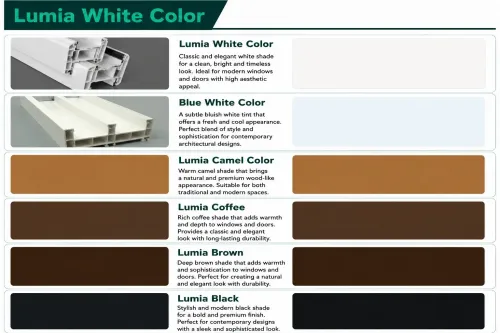
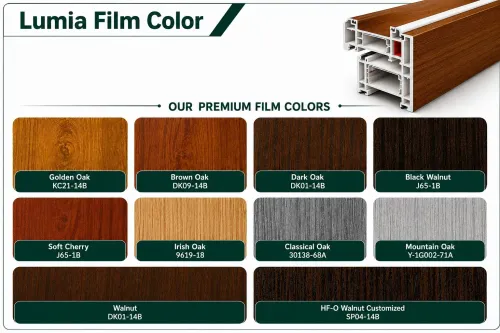
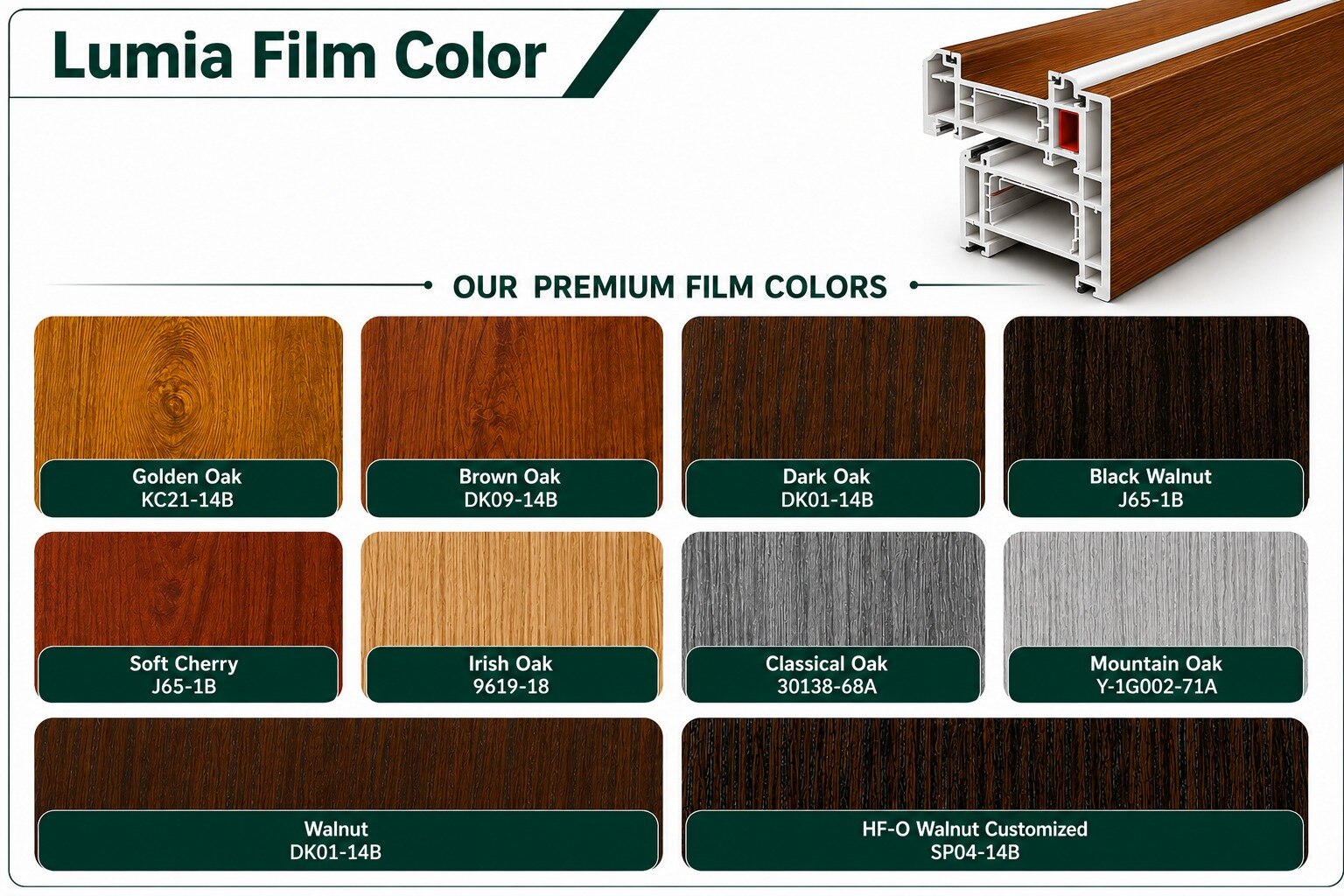
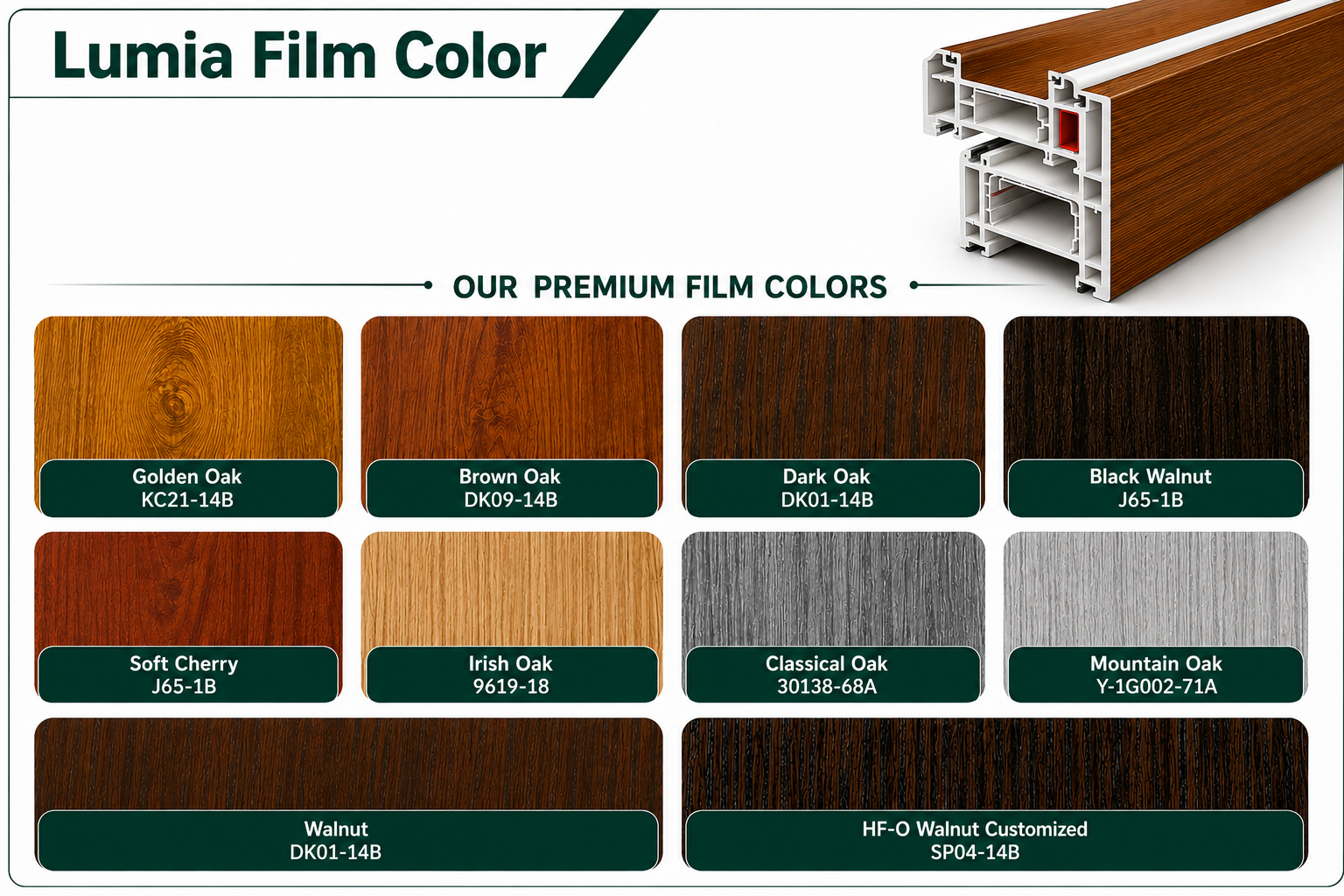 | Lumia Colors The Lumia Film Color Collection is designed to bring the natural beauty of wood and premium decorative finishes to modern uPVC window and door... View product → |
Frequently asked questions
How can you tell whether a uPVC decorative film is fading?
Uniform lightening across the exposed face suggests colour change. Powdery residue indicates chalking, while scratches, haze and dull patches suggest abrasion or chemical attack.
Which Bengaluru conditions accelerate uPVC film failure?
Strong sun, heat, monsoon moisture, dust, cement residue and poor installation details can accelerate colour change, edge lifting and surface damage.
What Lumia film colour specifications prove exterior performance?
Ask for documented colour-retention and weathering results, test conditions, exposure duration, substrate details and scratch-resistance data for the exact film specification.
How can construction work damage a decorative window finish?
Cement splashes, solvent cleaners, abrasive pads, cutting debris, heat and trapped protective-film residue can cause staining, haze, scratches or adhesive failure.
How should you investigate a disputed colour failure?
Map the affected elevations, compare shaded and exposed areas, photograph the finish and edges, record cleaning and construction history, and verify the installed film specification before replacing the window.